Heat Exchanger
- Home
- Heat Exchanger
Heat Exchanger Manufacturers in Odisha
Premium Shell & Tube, Plate & Air Cooled Heat Exchangers for Industrial Applications
Ocean Enterprises is recognized as one of the trusted Heat Exchangers manufacturers, suppliers, dealers and exporters in Odisha, delivering engineered thermal transfer systems designed for industrial performance, energy optimization, and long operational life. Our approach combines advanced heat transfer science, compact thermal architecture, corrosion-resistant construction, and process-specific engineering to support modern industries with efficient temperature control solutions. Designed for demanding environments, our Industrial Heat Exchanger systems integrate enhanced flow dynamics, optimized thermal conductivity, and upgraded heat recovery capabilities for reliable operation.
What Are Heat Exchangers and Why Are They Important in Modern Industries?
Heat Exchangers are engineered thermal transfer equipment used to transfer heat between two fluids without direct mixing while maintaining controlled process conditions. These systems play a critical role in energy conservation, thermal management, process efficiency, and operational sustainability across industrial sectors. Modern Heat Exchangers now include intelligent monitoring compatibility, computational flow optimization, and high-efficiency surface enhancement technologies to improve output while reducing energy consumption.
How Does a Heat Exchanger Working Principle Improve Industrial Efficiency?
- Thermal Energy Transfer Mechanism Heat exchangers operate by transferring thermal energy from a higher-temperature fluid to a lower-temperature fluid through a conductive barrier, enabling efficient temperature regulation without direct fluid mixing.
- Optimized Flow Configuration Heat transfer performance is enhanced through advanced flow arrangements and controlled fluid movement, ensuring improved thermal exchange efficiency across operating conditions.
- Enhanced Heat Transfer Efficiency The effectiveness of modern heat exchangers depends on critical parameters including heat transfer coefficient, surface geometry optimization, turbulence enhancement, and fluid velocity control.
- Advanced Thermal Engineering Integration Modern heat exchanger designs incorporate optimized channel architecture, predictive thermal balancing, and low pressure-drop configurations to maximize energy efficiency and process performance.
Which Types of Heat Exchangers Are Best for Industrial Applications?
A well-known Heat Exchangers manufacturers in Orissa, we are providing the best quality Heat Exchangers such as:
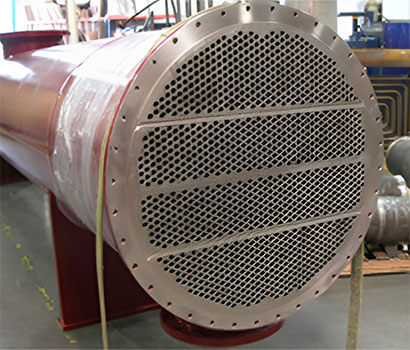
- Shell and Tube Heat Exchanger Shell and Tube heat exchanger systems are designed with multiple tube bundles enclosed within a pressure-resistant shell for large-scale thermal transfer operations. These units support high-pressure environments and now incorporate advanced baffle arrangements and enhanced turbulence generation for improved efficiency. They are widely selected for petrochemical processing, power generation, and heavy industrial applications.
- Double Pipe Heat Exchanger Double Pipe Heat Exchanger systems consist of concentric pipe assemblies that allow controlled heat exchange between process streams. New-generation models integrate compact installation layouts and optimized counter-flow configuration to maximize thermal performance. These exchangers are highly suitable for small-capacity industrial operations and precision process applications.
- Plate Heat Exchanger (PHE) Plate Heat Exchanger (PHE) systems utilize corrugated plate structures that increase heat transfer area while minimizing equipment footprint. Modern designs include gasket innovation, intelligent sealing technology, and compact modular construction for easier expansion. Their high thermal efficiency makes them ideal for food processing, pharmaceutical, and HVAC systems.
- Finned Tube Heat Exchangers Finned Tube Heat Exchangers are engineered with extended surface fins to increase contact area and accelerate thermal exchange performance. Advanced fin geometries and airflow management technologies improve heat recovery while reducing operational energy requirements. These systems are extensively used where air-side heat transfer efficiency is critical.
Advanced Heat Exchanger Technologies by Ocean Enterprises
- Advanced Structural Architecture & Ultra-Compact Designs Ocean Enterprises offers advanced heat exchanger solutions engineered for maximum heat transfer with minimal installation footprint.
- Printed Circuit Heat Exchangers (PCHEs): Manufactured using micro-channel etching and solid-state diffusion bonding, delivering reliable performance under extreme temperatures and pressures up to 600+ bar. Ideal for cryogenic processing, supercritical CO₂ power cycles, and offshore LNG applications.
- Micro channel Heat Exchangers (MCHEs): Built with multi-port flat tubes and micro-scale channels, providing high heat transfer efficiency (5,000+ m²/m³ area-to-volume ratio) while reducing refrigerant consumption and supporting low-GWP refrigerants such as R290 and R744.
- Additive Manufacturing (3D Printing) We utilize advanced 3D printing technologies to manufacture highly efficient and complex heat exchanger designs.
- Generative & Biomimetic Geometries: AI-assisted and selective laser melting technologies create optimized internal flow paths and TPMS structures to improve turbulence, increase thermal efficiency, and reduce pressure drop.
- Monolithic Construction: Single-piece multi-channel manufacturing eliminates welds, braze joints, leak points, and thermal stress zones, ensuring higher durability and performance.
- Intelligent Integration & Digital Twin Technologies Ocean Enterprises delivers Industry 4.0-ready heat exchanger systems for intelligent plant operations.
- Predictive Maintenance: Integrated IoT sensors and machine learning analytics continuously monitor temperature, pressure, and flow to predict fouling and optimize maintenance schedules.
- Dynamic Closed-Loop Control: Real-time data integration enables automated flow and performance adjustments, maintaining stable thermal efficiency during changing operating conditions.
What Advanced Features Make Heat Exchangers More Efficient Today?
One of the leading Heat Exchangers suppliers in Odisha, our all-types of Heat Exchangers is included with new technological formulations such as:
- Optimized Flow Configuration Engineering: Advanced Flow Configuration technology improves fluid distribution and minimizes energy losses during heat transfer. Computational thermal design helps achieve balanced temperature performance and stable process control. These enhancements contribute to increased productivity and thermal precision.
- Smart Monitoring Compatibility: Modern Heat Exchangers support integration with digital monitoring and predictive maintenance platforms. Sensor-enabled performance analysis assists operators in identifying efficiency changes before process interruptions occur. This improves operational reliability and asset management.
- Corrosion-Resistant Industrial Construction: Our systems are developed using industrial-grade materials selected for thermal durability and long service life. Advanced protective treatments enhance resistance against chemical exposure and environmental stress. This results in improved lifecycle performance and reduced maintenance frequency.
- High-Efficiency Thermal Transfer Surfaces: Engineered surface enhancements increase contact efficiency and maximize heat exchange performance under varying operating conditions. Advanced channel profiling reduces thermal resistance and improves process consistency. These innovations support lower operational costs and improved energy utilization.
Where Are Industrial Heat Exchangers Commonly Used?
Being the best Heat Exchangers exporters and dealers in Orissa, our all types of Heat Exchangers are included with new feature and highly used in multiple applications such as:
- Chemical and Process Industries Heat Exchangers support controlled thermal processing, reaction temperature stabilization, and energy recovery systems. Advanced industrial integration enables efficient process continuity and optimized production quality. These systems improve throughput while reducing thermal waste.
- Power Generation Facilities Thermal transfer equipment is essential for condensers, cooling cycles, and energy conversion operations. Modern designs assist in maintaining process efficiency under continuous operating loads. Improved heat recovery contributes to lower energy consumption.
- Food and Beverage Manufacturing Heat exchange systems maintain hygienic temperature control throughout processing operations. Compact thermal architecture supports product quality and improved processing efficiency. Enhanced cleaning compatibility ensures regulatory and operational performance.
- HVAC and Environmental Systems Air Heat Exchanger technologies are widely used for climate control and energy-efficient ventilation processes. Modern airflow engineering improves indoor environmental performance and thermal management. These systems contribute to sustainable infrastructure operations.
Ocean Enterprises is recognized as one of the trusted Heat Exchangers manufacturers, suppliers, dealers and exporters in Odisha. Our commitment to innovation, quality manufacturing standards, and evolving thermal technologies enables industries to achieve sustainable operations, optimized energy utilization, and dependable process performance across diverse applications. Contact us today for more information!
Frequently Asked Questions (FAQs)
Shell and Tube heat exchanger systems are generally preferred because of their robust construction, pressure-handling capability, and scalable thermal performance.
Efficiency depends on Flow Configuration, heat transfer surface area, fluid velocity, temperature difference, fouling resistance, and equipment design.
Plate Heat Exchanger (PHE) systems offer compact design, higher thermal efficiency, easier maintenance, and improved energy optimization.
Advanced monitoring compatibility, optimized thermal surfaces, efficient flow management, and energy recovery technologies help reduce long-term operational expenses.